
How I Stopped Fearing AI Replacement & Started Training One That Trains Me Back

I'm better at everything I do now, and it's not because AI is doing my work for me.
The conversation around AI and jobs is almost always framed as a zero-sum competition. Will AI take this role? Will it replace that function? That framing misses the point entirely.
With the way I've learned to operate with AI, I'm able to multitask and accomplish more every day than I could do in a week. Because I spent the last two years encoding my best practices into AI, I can guide it and it can guide me. Together we produce better work, faster, more consistently than would otherwise ever be possible.
This is what I think the future actually looks like: people and AI growing together, each one making the other sharper.

What does it mean to "encode your best practices" into AI?
In my previous position, I was running a 14-person M&A deal closing team, and realized I kept coaching the same negotiation patterns over and over. Chris Voss's Black Swan techniques, Cialdini's influence principles, Klaff's frame-setting and pitch concepts. I started writing those frameworks into my AI's system instructions so it could surface the right approach at the right moment, like having a coach in your ear during a live conversation.
That project we called CloserEdge. It has since evolved into an AI communication coaching system I call "Eji Negotiation Mastery", built around a persona called Eji and a set of 7 modular skills that I've created, tested, and refined through daily use ever since.

Eji's core job is adding awareness.
It helps me to add awareness of my own blindspots in how I'm approaching a conversation; awareness of what I'm feeling underneath the surface that might be driving my decisions without me realizing it; and awareness of patterns in my communication that I can't see while I'm inside them.
The system encodes how I think, how I write, how I prepare for difficult conversations, how I evaluate business decisions, and how I stay grounded under pressure. Every time I read a book that changes how I operate, I encode the key frameworks into the system. Every time I find a pattern that works in practice, I refine the AI's instructions so it recognizes that pattern next time I need it.
The cycle compounds in both directions:
I learn something new → encode it into the AI → practice it daily → sharpen my own skills → discover incremental inspiration → encode that too
The AI gets smarter because I feed it real-world experience and I get sharper because the AI holds my best thinking available when I need it most.
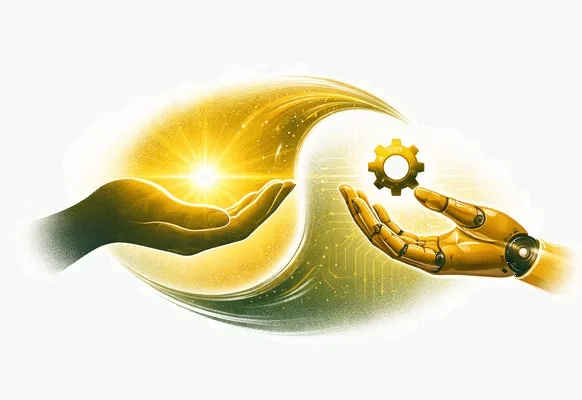
Why does Awareness matter more than Automation?
While working with Shahab Ghanavati on the emotional intelligence and self-awareness dimensions, we focused on something critical: the AI's job is not to replace the human element, but to make the human element more important.
Both the user and the AI carry gaps in understanding. I can't hold every framework I've ever learned in active memory at once. Claude can't know my emotional state, my history with the person I'm about to call, or what happened in my meeting yesterday. We each have our own context window, and they overlap but they're different.
The AI sees patterns I'm too close to notice, holds frameworks I can't keep in active memory, adds structure to my disparate thoughts, and flags blind spots in my thinking before I walk into a conversation. I bring my emotional presence, and the impact only a human can have on other people, and the reactions and results that can then inform a better shared understanding.
The real work happens in the overlap between those two context windows. The more I invest in personalizing the AI to how I actually think, the bigger that overlap gets and the better we both perform. The generic version of any AI tool is fine, but the version you've spent years training on your own frameworks, your own voice, and your own decision patterns is something else entirely.
The better the AI gets at structure and pattern recall, the more your edge as a human depends on judgment, presence, and self-awareness. Those aren't things AI replaces, but they are things that AI can help you to build and enhance.
Don't replace your own thinking, but instead amplify the thinking you've already done.
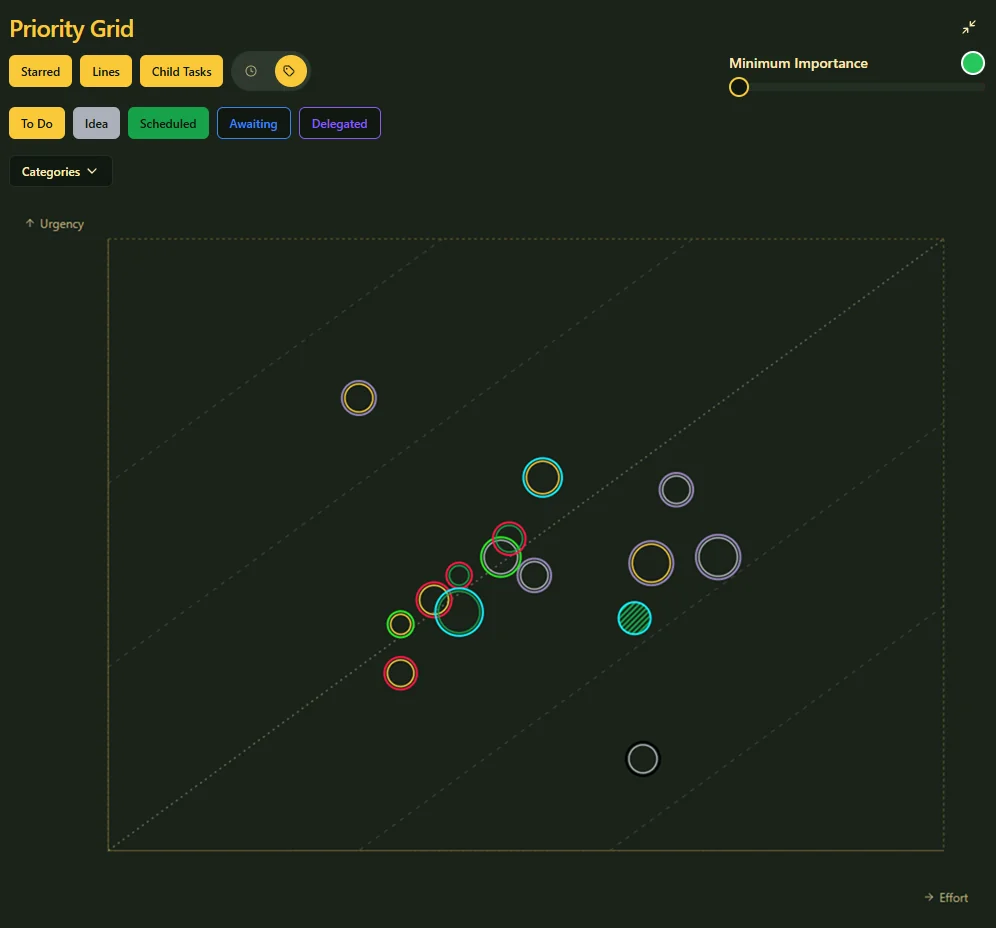
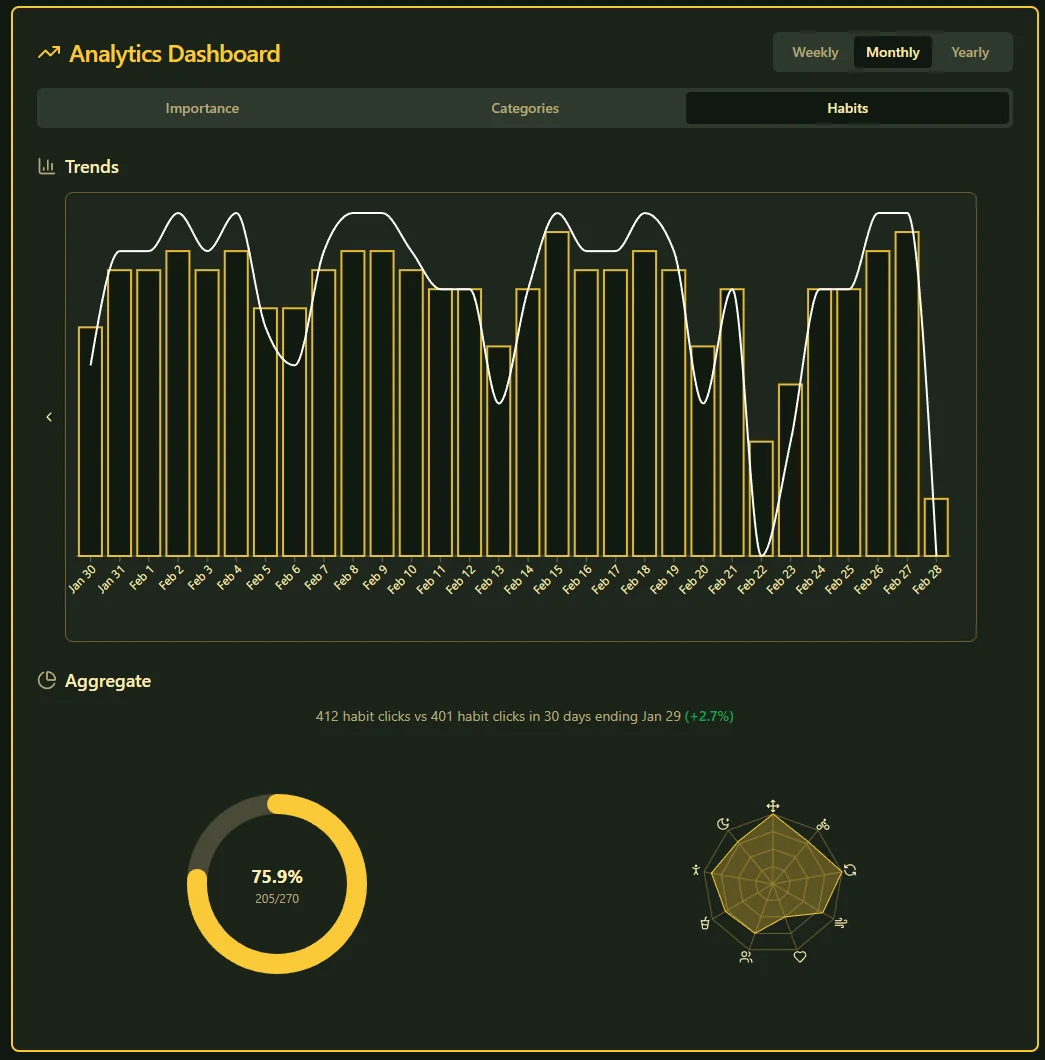
How does a personalized AI productivity system work in practice?
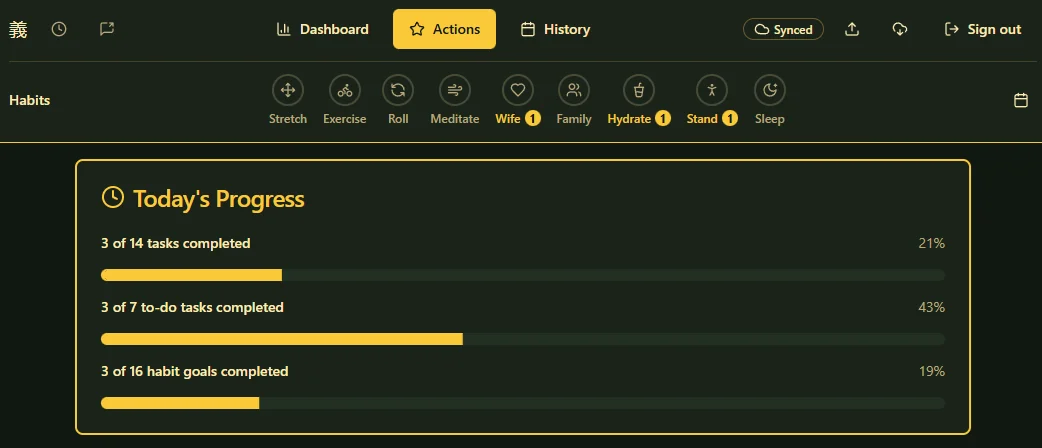
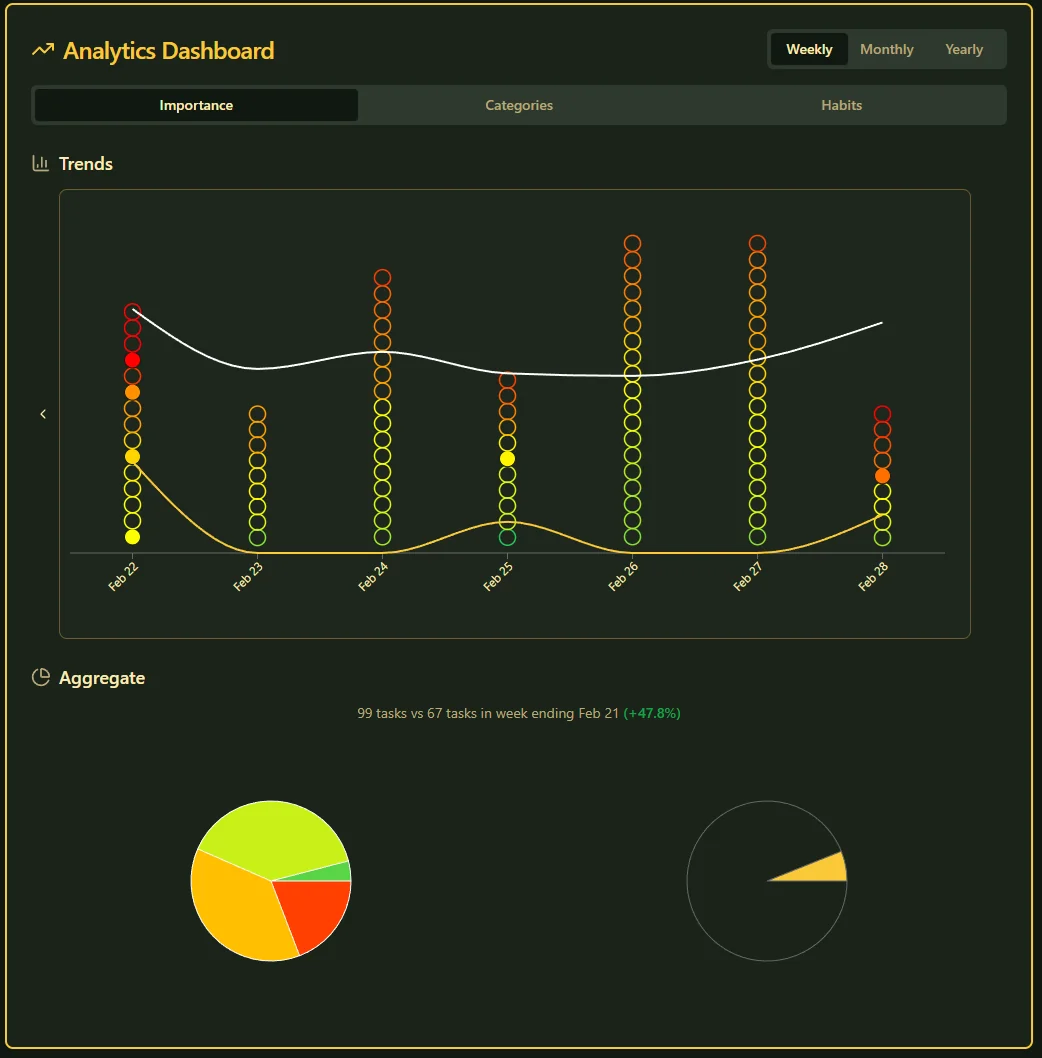
This week I connected my personal productivity system into the same Eji ecosystem. Over the past 8 months I've been vibe-coding a task and habit tracker on Lovable. This week I connected it directly to Claude. It tracks everything I'm working across simultaneously: business projects, personal finances, engineering, family commitments, health habits. Claude can now read my task data directly, see what's stale, help me plan my day, and understand the full picture of what I'm juggling when I ask for help prioritizing.
Even here, the value is awareness. When I can see all my commitments mapped out and the AI can flag what I've been avoiding or where my habits are slipping, I make better choices about where to spend my time and direct my focus.
These screenshots show what that looks like in practice. The habits dashboard tracks my daily patterns and shows me where I'm strong and where I'm falling off. I built this to match how my brain works, and it's now wired into the AI that knows how I think.
The Universal Eji Package for Everyone
The catalyst for this post is that I just finished restructuring the entire Eji system from a single monolithic project into a modular set of four portable skills that anyone can install into Claude and then hook up to their project folders:
Negotiation Mastery is the flagship. It covers conversation preparation, email drafting with tactical intent, accusation audits, and the full Flow, Influence, and Pitch frameworks drawn from Voss, Cialdini, and Klaff. These are the same techniques I use every day, built from years of practice at Goldman Sachs, Woodbridge International, and in my own ventures.
Predictive Index Profiling helps you understand how other people are wired based on the PI behavioral framework, so you can calibrate your communication to how they actually process information.
Humane Writing strips AI-generated patterns from your writing and keeps your communication sharp, natural, and authentically human.
AI SEO Writing structures your content so AI search engines can find, extract, and cite it.
I also have skills for internal awareness and grounding, entrepreneurship frameworks, and a productivity integration that connects my vibe-coded to-do list directly into the coaching ecosystem, but those are more personal to how I work.
If you're interested in trying the universal Eji package, reach out to me directly. I want more people to see what's possible when you stop using AI as a search engine and start building it into a thinking partner.
jkoenig@komcp.com
This is the 1st in a series about Eji, my personal AI negotiation and communications tool
- The Eji System → komcp.com/shared-mastery-022826
- Amplify Your Edge → komcp.com/amplify-your-edge-032326
- Owning the Memory → komcp.com/own-the-memory-own-the-era-041326
- More Reliable AI → komcp.com/reliable-ai-042726
- Two Memories → komcp.com/two-memories-050826
- Structure of Memory → komcp.com/structure-of-memory-062326
- Drowning in Facts → komcp.com/drowning-in-facts-062926
- The Fable of Eji → komcp.com/fable-of-eji-071626